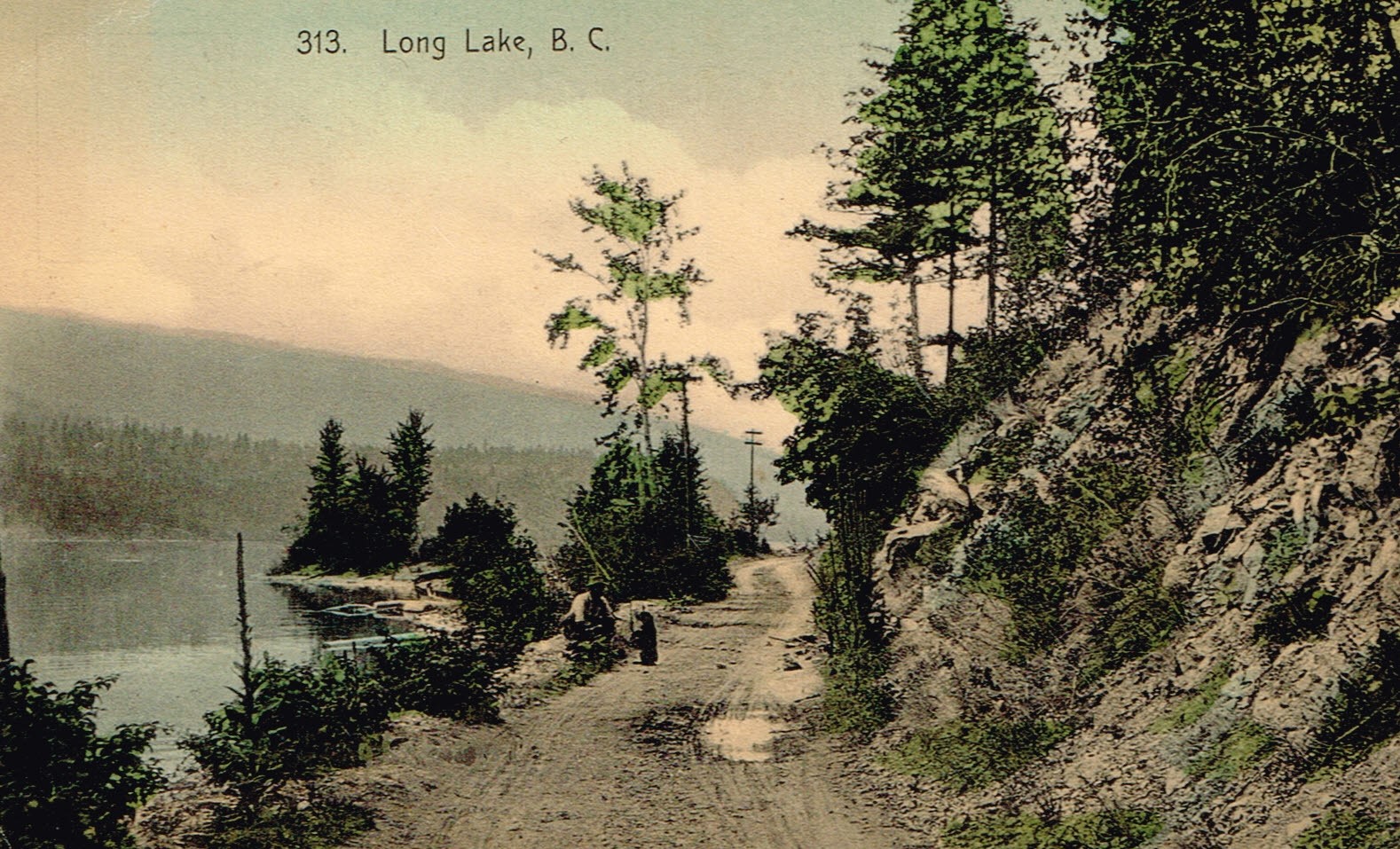
Settlers began planting fruit trees in the Okanagan in the 1860s. Thought at this time planting fruit was considered a risk because the fruit was perishable and the only means of transportation could take up to two weeks to get the fruit to a major center. Most farmers preferred the certainty of...
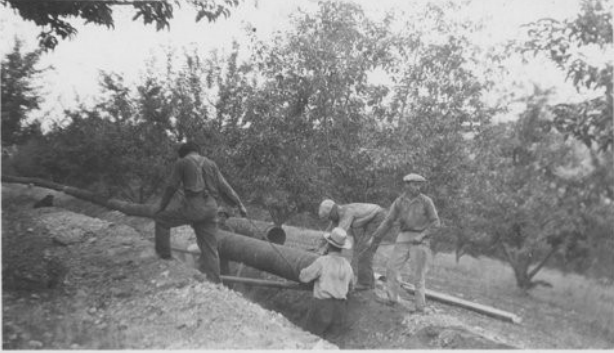
Lake Country is aptly named. Its four wards – Winfield, Okanagan Centre, Carr’s Landing and Oyama – have access to three major Lakes: Okanagan, Kalamalka, and Wood. The latter lake was named for pioneers Thomas (1841 – 1931) and Ellen Florence (nee Whelan) Wood (1861 – 1905), who settled in the...
Following upon previous blogs on logging in the region in the 1920s, I have more recent and personal remembrances to relate. My father, Harold, and grandfather, Harry, operated a portable bush mill on the Commonage in the 1950s, supported by horse logging. The operation was located off Commonage...
Applebox Belles presents the stories of the pioneers, the Summer Girls, and the champion Apple Wrapper Flappers of Lake Country’s early apple packing industry. These determined women quickly became the workforce of the packinghouses, sorting, wrapping, packing, and stamping, and they transformed a...
Pelmewash Parkway is about to be devoted entirely to local traffic, providing Lake Country with the wonderful asset of seven kilometres of lakeshore for all manner of recreation. This seems to be an opportune time to discuss the origin and possible meaning of the name “Pelmewash.” I confess that...
April 29, 2013: e-mail to Mits Hikichi, son of Rainbow Ranche (Lake Country) Foreman Sam Hikichi, from Laura Neame, archivist of Lake Country Museum and Archives. Hello Mits Hikichi, We are hoping you can shed some light on a mystery. We received some donated papers from the Rainbow Ranche. Tucked...