Joseph Hayton was the third owner of the V Bar V ranch in Oyama. Hayton Creek and Hayton Road are named after him. He was born near Ventnor, Isle of Wight to George Hayton, Rector of Niton, and his wife Ellen Louisa (Chadwick) Hayton. He immigrated to Canada from England at age 19 on 25 April 1895...
A Railway Runs Through It: The Okanagan Railways Today (June 30, 2005). By David Madison The locomotive feels like a living thing as it rolls from side to side over the weed-covered rail bed. “That’s just the harmonic roll,” says engineer Dean Taylor who is at the throttle of...
Richard and Arthur Chatterton were part of an aspiring, middle class, English family. Their parents, George Joseph and Jane Edwards Chatterton and family appear in the 1891 UK census in Alvaston, Derbyshire, Herts, England. Their father was a metal tube manufacturer although he had earlier been...
Figure 1:Warf at Okanagan Centre in early Days. Packing house to right. For the first three decades of the twentieth century, Okanagan Centre was the commercial hub of the area. From the late 1800s to the 1930s, Okanagan Centre was one of the main points for the Central...
Before Lake Country, there was Okanagan Centre. For the first three decades of the twentieth century, Okanagan Centre was the commercial hub of the area. From the late 1800s to the 1930s, Okanagan Centre was one of the main points for the Central Okanagan. It was also a major port...
Two Gibbons brothers, Harry from Ellison and Clare from Okanagan Centre went into partnership to establish OK Sawmills sometime shortly after 1940. The brothers operated their sawmill at a number of locations on the extensive forested slope south and east of Kelowna, moving every few years to...
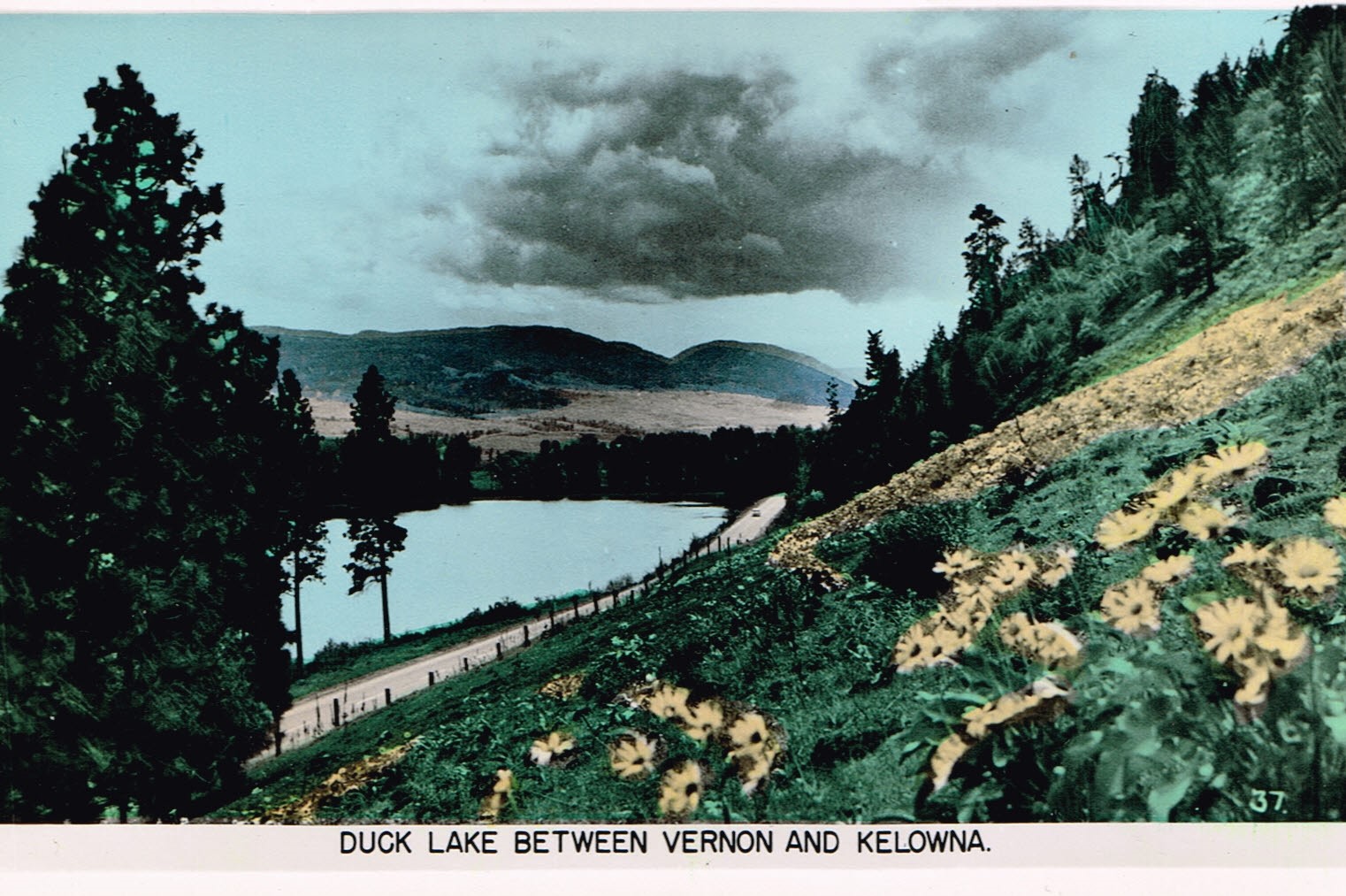
From the collection of Bob Hayes Note the “sunflowers’ – official name being “arrow-leaf root balsam” – in the foreground of this postcard and the classic Okanagan sky. Black Knight Mountain (now known as Black Mountain) is partially visible in the background. These beautiful flowers, native to...
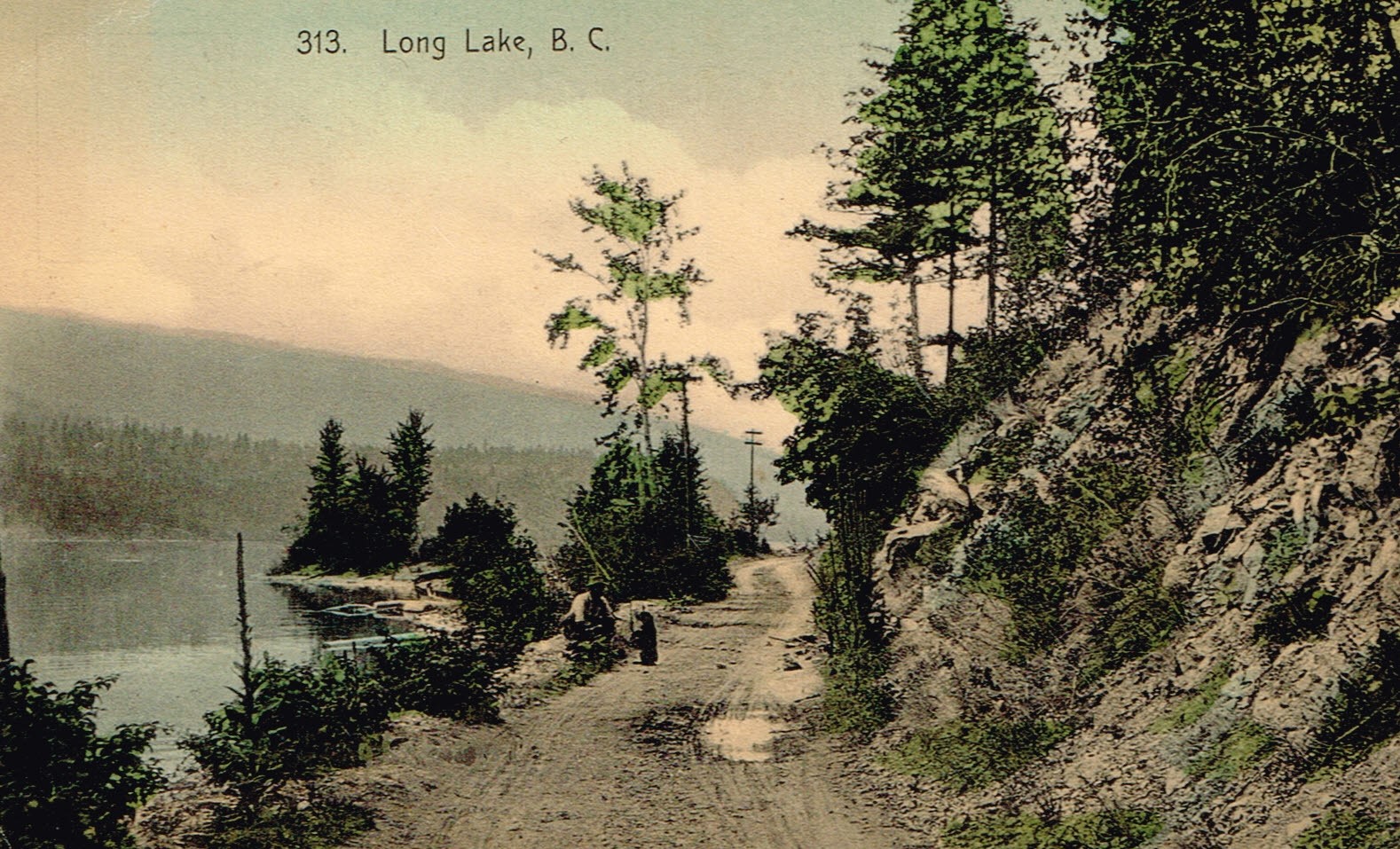
Lake Country is aptly named. Its four wards – Winfield, Okanagan Centre, Carr’s Landing and Oyama – have access to three major Lakes: Okanagan, Kalamalka, and Wood. The latter lake was named for pioneers Thomas (1841 – 1931) and Ellen Florence (nee Whelan) Wood (1861 – 1905), who settled in the...
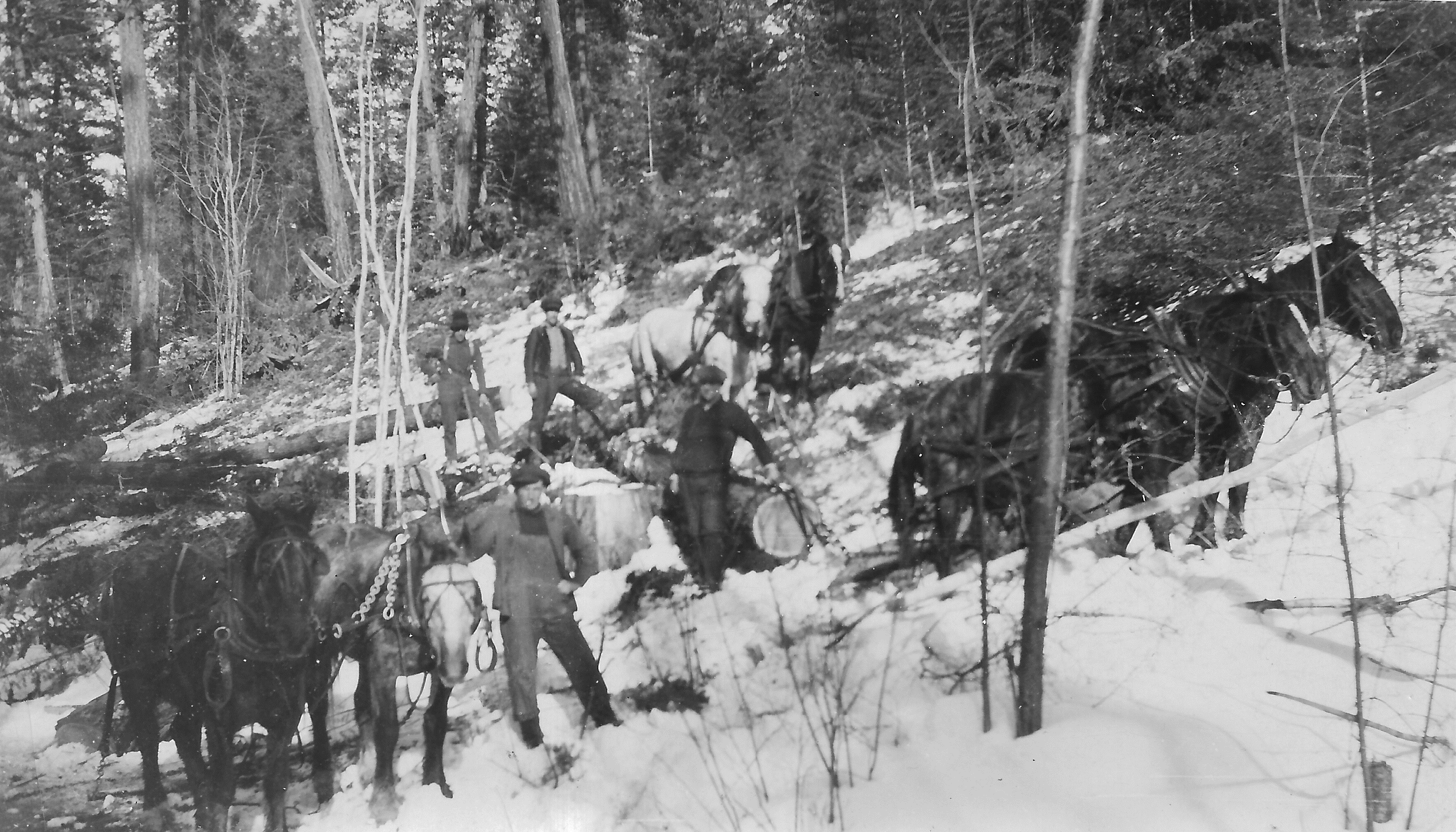
Following upon previous blogs on logging in the region in the 1920s, I have more recent and personal remembrances to relate. My father, Harold, and grandfather, Harry, operated a portable bush mill on the Commonage in the 1950s, supported by horse logging. The operation was located off Commonage...
Eliza Jane Swalwell’s bungalow was located near the entrance to Swalwell Park, toward Middle Vernon Creek. The Swalwell barn also faced Bottom Wood Lake Road a little further east. Jane’s nephew, Pete Simpson, who is now ninety-two years of age, remembers visiting his Aunt Jane during the...
Our blog on the Munson Simpson sawmill that operated in Winfield from 1927 to 1929 appeared earlier. Another blog, “Log chutes in Lake Country” discussed the log chute that over a decade earlier had transported logs from Fir Valley to the Oyama bench land and hence to the Johnston and Carswell...
This is the third in a series of blogs exploring the logging history of Lake Country, this one focussing on transporting logs to the Munson and Simpson mill in Winfield in the 1927-9 period. Large logs were preferred because the end-use was to make knot-free Applebox shook. These large logs were...