More Icterids – Bullock’s Oriole and Western Meadowlark In the spring posting we looked at three of the family known as Icterids. Those three were Red-winged Blackbird, Brewer’s Blackbird and Yellow-headed Blackbird. Today let’s turn our attention to two more Icterids, namely the Bullock’s Oriole...
Red-winged Blackbird, Yellow-headed Blackbird, and Brewer’s Blackbird One and perhaps two of today’s birds are probably familiar to you, the other might not be. They are all blackbirds, members of the Icterid family, a group comprising (in our valley) these two, as well as Western Meadowlark and...
You might suppose that wintertime is not a good time for a bird that spends its life near running water, but in fact this species is able to survive in icy cold water, and manages to feed even under riverside ice. The rather nondescript appearance of the American Dipper belies its amazing...
At this time of year, when so many of our colourful summer breeding birds are winging their way southwards for the colder months, it is a pleasure to turn our attention to birds that stay here year round. This time let’s focus on our three species of nuthatch, White-breasted, Red-breasted, and...
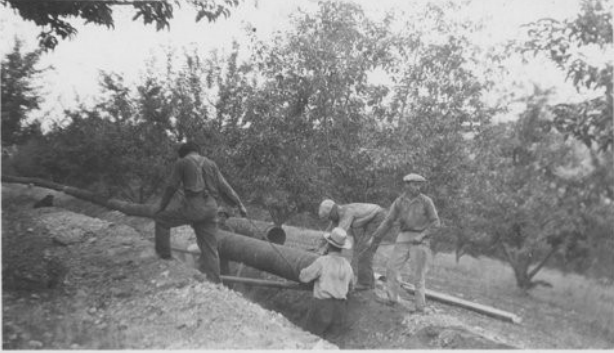
Figure 1:Warf at Okanagan Centre in early Days. Packing house to right. For the first three decades of the twentieth century, Okanagan Centre was the commercial hub of the area. From the late 1800s to the 1930s, Okanagan Centre was one of the main points for the Central...
Before Lake Country, there was Okanagan Centre. For the first three decades of the twentieth century, Okanagan Centre was the commercial hub of the area. From the late 1800s to the 1930s, Okanagan Centre was one of the main points for the Central Okanagan. It was also a major port...
Settlers began planting fruit trees in the Okanagan in the 1860s. Thought at this time planting fruit was considered a risk because the fruit was perishable and the only means of transportation could take up to two weeks to get the fruit to a major center. Most farmers preferred the certainty of...
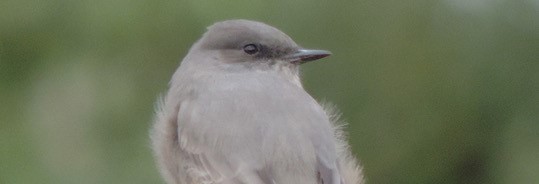
Last summer I introduced you to our largest flycatchers, the kingbirds, Eastern Kingbird and Western Kingbird. This year let’s look at other flycatchers that also come here in summer to breed and raise their young on abundant insect food during the warmer months. Some of these are usually found at...
We’ve got problems right now. Big problems. But in 1893 they had some pretty wild problems! Thanks to a copy of a letter from the BC Archives, the Lake Country Museum has a unique glimpse into what life was like in Vernon in 1893. The letter’s written by Judge Spinks of Vernon to the Attorney...
When life is challenging it can be helpful to read the signs nature gives us of rebirth and renewal. Trees, flowers, and shrubs put on new growth and in the bird world, spring brings us the annual miracle of migration to brighten our days and bring promise of new life. Today’s subjects, Turkey...
Great Blue Heron Moving quietly and slowly, inching forward with neck arched, feet slowly raised thenplaced, and dagger-like beak poised, a Great Blue Heron stalks its prey. Then comes a lunge,a stab – and the fish, frog or cicada is toast. While Great Blue Herons are not common inwinter in...
California Quail The days are growing shorter and cooler and the colourful summer birds that came north to breed and raise their young have gone south in search of warmer temperatures and food. So it’s time to turn our attention to birds that stay here in fall and winter. Where better place to...